6: 15 in the morning. My alarm goes on. I extend my arm and while I try to grab my cell phone and turn off an annoying alarm ringtone, I drop my glasses, Tolstoy’s War and Peace follows them and with the sound of Napoleon’s artillery smashes my glasses just like French cuirassiers smashed Russian Cossacks in the battle of Borodino. Eventually I manage to reach my phone and accidently push it of the table. Ringing stops, I could clearly hear the battery flying out of the cell phone. First thought comes through my mind, “What a terrible morning”. I bend over my bed, open my eyes and look at the result of the battle. Glasses were completely destroyed and Lev Tolstoy was looking at me from the cover of the book just like Lenin was looking at Bourgeoisie. I grab my cell phone and automatically read what is written on it, NOKIA. Second organized thought comes through my mind, “Wow, I am awake for about ten seconds and I am already being affected by the all-powerful media”. Before making my way to the shower I stop at the refrigerator to get something to drink, and when I open it, all the products with the companies’ logos are being exposed to me, and once again all-powerful media reaches my brain…
Every minute our brain receives messages from various media sources. We are being bombarded by these messages without even noticing it and very often, just like an artillery fire, these messages reach our brain with an unbelievable accuracy and leave a tremendous impact on us. Advertisement business is very similar to the weapons business, new types of advertisements are being created just as often as new types of weapons and it is similar to the arm race. In 21st century multimedia became the most popular advertisement environment providing “a weapon of mass distraction” for corporations. The nature of multimedia is that it is not limited to any norms or principals. Its messages can target anyone and can carry any meaning. Multimedia is able to adapt to any surrounding environment by changing its form, just like a chameleon, but not in order to hide and protect itself, but to wait for a careless victim and then strike it with all its power and to infect it with the deadly venom.
Thursday

Sunday
Googlezon Reaction

All of us know about antitrust laws which protect fair competition and strive to provide a variety of choices to the consumers which can be based on price and quality. As a result we are given a privilege to choose between different goods (both, needs and wants) and services, and therefore to provide opportunities for emerging companies. But what about the media that we are being exposed to while surfing the internet? Should we have a right to choose what information we want to receive while reading an online newspaper article or reading people’s blogs or shopping online? Do we need laws which will make sure that such companies as Google will not create the majority of information that we are consuming on the internet?
Since internet became an everyday source of information for many people with different gender, nationality, age, interests and believes, we became depended on it just the same way we became depended on cars. The only difference is that when we buy a car, we are one hundred percent positive that we are in a full right of choosing what car brand we want, what color it should be and how much we are willing to pay for it. And it sounds completely ridiculous that a car dealer with a help of software like Amazon can crack into our brain and choose a “perfect” car for us. So if it sound that unreasonable in the case like this, why should it be perfectly normal for companies like Google to do exactly the same thing but on the internet? Googlezon is a great example which gives us a dismal image of the internet’s possible future.
Saturday
Manipulated Images
Individually, respond in writing to the following prompt: "In The New York Times article, the author writes: 'Indeed a manipulated image, which is often more powerful than the sum of its parts, can affect not just visual perception but opinions, as well.' Reflect on this statement. Then draft a position statement to guide photojournalists and news editors in their work. What specific power do photos have to tell the truth and how should photojournalists and news editors respect this power? What specific guidelines should photojournalists and news editors take to limit image manipulations, posed events, and other types of fakery? What counts as manipulation and what counts as reasonable editing, cropping or enhancement?"

An image is a very powerful instrument which can be used in order to help or to harm someone. Many scientists agree that our thoughts are made up of images and if so, images are easiest to understand for our brain. Very often we accept images as they are, without even having a back thought if it is fake or real. Unfortunately people learned how to manipulate images and therefore to manipulate minds.
With the help of an image it is possible to gain some control over a group of people in order to make them buy something, use different services and even vote for someone. People are used to take an image as a truth and for many of them it is hard to tell a fake image from a real one. I agree that a manipulated image can affect not just visual perception but also opinions. Providing false information to the audience in order to achieve a personal goal cannot be justified by any means and should not be included in any news sources.
I think that manipulated images can reach public only in the entertainment form or as a type of tabloid media, but every journalist has to make sure not to use edited photographs for the news sources. Edited photographs are suitable for satires, posters and sometimes advertisements, but only when the audience can tell that the photograph was edited or it says so by the author of the photograph.
It is very hard to draw a line between manipulating and reasonable editing, I think that it is up to the audience to decide whether a photograph was manipulated or not. But in order to avoid confusion an author of a photograph has to specify whether the photograph was edited or not, and if yes, then how.

An image is a very powerful instrument which can be used in order to help or to harm someone. Many scientists agree that our thoughts are made up of images and if so, images are easiest to understand for our brain. Very often we accept images as they are, without even having a back thought if it is fake or real. Unfortunately people learned how to manipulate images and therefore to manipulate minds.
With the help of an image it is possible to gain some control over a group of people in order to make them buy something, use different services and even vote for someone. People are used to take an image as a truth and for many of them it is hard to tell a fake image from a real one. I agree that a manipulated image can affect not just visual perception but also opinions. Providing false information to the audience in order to achieve a personal goal cannot be justified by any means and should not be included in any news sources.
I think that manipulated images can reach public only in the entertainment form or as a type of tabloid media, but every journalist has to make sure not to use edited photographs for the news sources. Edited photographs are suitable for satires, posters and sometimes advertisements, but only when the audience can tell that the photograph was edited or it says so by the author of the photograph.
It is very hard to draw a line between manipulating and reasonable editing, I think that it is up to the audience to decide whether a photograph was manipulated or not. But in order to avoid confusion an author of a photograph has to specify whether the photograph was edited or not, and if yes, then how.
Monday


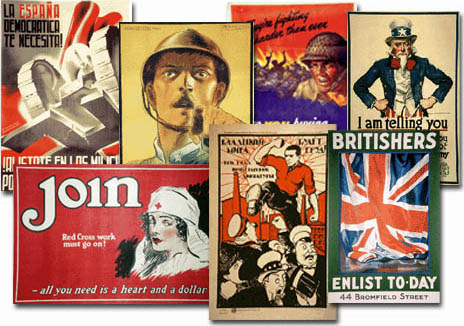
Technology and Media
On October second, 1957, people all around the world witnessed the launch of the first man-maid satellite Sputnik 1. Many thought of it as a nuclear threat, or a new step in the evolution of science, or the coming of Antichrist. But no one had in mind that this 83 kilogram piece of metal will be a start for a revolutionary step in the world’s media. Only five years after, the first satellite television signal was relayed from Europe to the Telstar satellite over North America. These events became a start of the Satellite Television era, which even now allows people to watch television programs not just from their area, but from all around the world.
After the satellite television became available to the public, people all around the world gained an opportunity to be connected to the world’s media, not just to the local one. This invention changed television media dramatically. Television channels no longer had an audience which was limited by distance, now they could be heard by anyone and anywhere in the world. News channels like CNN were not the only national news channels, many local channels started to broadcast worldwide. Satellite television allows immigrants to be more in touch with their home country by watching news from their country, familiar television shows, and movies on their native language. Of course some can say that this will only lead immigrants away from the assimilation and they will not be interested in the events which happen in the place where they live, but where they came from. But in order not to forget their history and culture immigrants need to be informed about the current events in their homeland. Satellite television also allows people to discover the outside world, understand the viewpoints of different nations, and the most important to know an outside view on the issues inside their community.
With the creation of the Satellite Television people all around the world gained an access to all types of video media. Now people can learn new languages, cultures and gain any type of knowledge without leaving their town.
After the satellite television became available to the public, people all around the world gained an opportunity to be connected to the world’s media, not just to the local one. This invention changed television media dramatically. Television channels no longer had an audience which was limited by distance, now they could be heard by anyone and anywhere in the world. News channels like CNN were not the only national news channels, many local channels started to broadcast worldwide. Satellite television allows immigrants to be more in touch with their home country by watching news from their country, familiar television shows, and movies on their native language. Of course some can say that this will only lead immigrants away from the assimilation and they will not be interested in the events which happen in the place where they live, but where they came from. But in order not to forget their history and culture immigrants need to be informed about the current events in their homeland. Satellite television also allows people to discover the outside world, understand the viewpoints of different nations, and the most important to know an outside view on the issues inside their community.
With the creation of the Satellite Television people all around the world gained an access to all types of video media. Now people can learn new languages, cultures and gain any type of knowledge without leaving their town.
Saturday
The Corporation
After watching a documentary called The Corporation in my English class I asked myself a question whether corporations is a “big evil” or a “big good” in the modern day world. In a free market economy creation of corporations is a pretty common and unpredictable phenomenon. Human needs and wants change more often than the outfits of a true fashionista. Corporations appear in order to satisfy these needs and wants. One can say that corporations provide jobs, goods and services to population and others can say that they manipulate prices on the market, corrupt the bureaucratic system of the state, and do not pay any attention to labor rights. If you will judge corporations by these factors it will be hard to understand how much control and power they have, and it will be very hard to shape a true image of the corporation. We always have to keep in mind that people are the main actors on the market, and corporations are just blind puppets which only exist to satisfy its masters.
Super Size Me, reflection
“Do not eat fast food! It is bad for your health! It will make you obese!” All these messages constantly bombard the audience while watching the Super Size Me movie. Morgan Spurlock decided to create a documentary in which he makes an experiment on himself by eating nothing but McDonald’s food for one month. The obvious goal of this documentary is to inform the society about the harm of the fast food, but it also touches the topic about the numerous lawsuits on Multi National Corporations (MNC) like McDonalds.
A movie review from A.O. Scott and David Edelstein challenges Morgan’s documentary and gives a very detailed analyses of the main ideas of the movie. One of the arguments between A. O. Scott and David Edelstein is whether it is right or wrong to sue McDonalds or other fast food MNCs. David Edelstein encourages the public to fight against McDonald’s empire through endless lawsuits. He believes that it is McDonald’s fault that the nation is becoming obese and unhealthy. He supports the idea that McDonalds is a threat to American nation, and it should be fought in the court of justice.
 Anthony Scott on the other hand believes that it is in people’s hands to decide whether “to be or not to be” or in the other words, to eat or not eat McDonald’s food. He believes that McDonalds should not directly pay the price for their harmful food, but it is the responsibility of the society to start paying more attention to its health and stop consuming fast food in the unhealthy amounts. Anthony Scott compares McDonald’s to such MNCs that produce tobacco and alcohol products. His opinion is that the public is informed about the harm of these products but they are not outlawed and McDonalds should not be an exception.
(Photo of Anthony Scott)
Though I agree that McDonalds more of disadvantage to the society then advantage, I do not think that it is a right thing to sue the company. I believe that it is more fair and effective to try reaching the public and to inform it about the harm of McDonalds and to encourage people to stop buying fast food. I admire Morgan Spurlock because he tried to achieve this goal and to some extent he seceded, even though most likely it was done for his own profit. 
A movie review from A.O. Scott and David Edelstein challenges Morgan’s documentary and gives a very detailed analyses of the main ideas of the movie. One of the arguments between A. O. Scott and David Edelstein is whether it is right or wrong to sue McDonalds or other fast food MNCs. David Edelstein encourages the public to fight against McDonald’s empire through endless lawsuits. He believes that it is McDonald’s fault that the nation is becoming obese and unhealthy. He supports the idea that McDonalds is a threat to American nation, and it should be fought in the court of justice.
 Anthony Scott on the other hand believes that it is in people’s hands to decide whether “to be or not to be” or in the other words, to eat or not eat McDonald’s food. He believes that McDonalds should not directly pay the price for their harmful food, but it is the responsibility of the society to start paying more attention to its health and stop consuming fast food in the unhealthy amounts. Anthony Scott compares McDonald’s to such MNCs that produce tobacco and alcohol products. His opinion is that the public is informed about the harm of these products but they are not outlawed and McDonalds should not be an exception.
(Photo of Anthony Scott)
Though I agree that McDonalds more of disadvantage to the society then advantage, I do not think that it is a right thing to sue the company. I believe that it is more fair and effective to try reaching the public and to inform it about the harm of McDonalds and to encourage people to stop buying fast food. I admire Morgan Spurlock because he tried to achieve this goal and to some extent he seceded, even though most likely it was done for his own profit.

Friday
O u t F o x e d
Critical Questions
1) WHO is communicating and why? This refers to advertisers, producers, TV networks, etc. Keep in mind that there may be more than one person or group speaking and they may be doing so for different reasons.

The director and the producer of the film OutFoxed is Robert Greenwald. He is not just a film director but he is also a very popular political activist. Throughout his career he always publicly supported Democratic Party and every presidential candidate from Democratic Party. During 2008 presedential campaign he publicly supported Obama and created a few videos like "Fox Attacks: Obama" and "The Real McCain", in which he encourages the audience to think twice before putting a checkmark against the name of the Republican candidate, during the election day.
Photo of Robert Greenwald, Producer of OutFoxed
2) WHAT TYPE of text (or medium) is it? Is it a television, film, a book, a photograph, magazine etc.? A combination? In this case, “text” is the physical
 form the media project takes.
This is a 137 min. film.
3) HOW is it produced? Is it a video, film, computer-based, print-based, etc.?
This is a film that also contains a lot of short videos and news reports taken from the FOX news TV program.
4) HOW do we know what it means? What kind of social and cultural images or communication patterns does the media project use to allow people to read the meaning?

In order to deliver the message to the audience this film uses a lot of different techniques that are commonly used in other documentary movies. Interviewing different people who are very knowledgeable on the subject is one of these techniques. There are also a lot of short news reports taken from FOX news, which usually underline the accuracy of the thesis of this film.
5) WHO receives it and what sense do they make of it? What kinds of different groups is the media project targeted for?
The main goal of this movie is to give a message to those people who rely on the FOX news as the primary source of the current events. But in my opinion it is very unlikely for someone who watches FOX news to watch this movie at the first place and to believe in it. The audience that will receive the message of the film will be the people who already have liberal political views and who do not watch fox news in order to enrich their knowledge in current events.
6) How does it PRESENT its subject? What styles or aesthetic codes a being used?
While trying to make the main idea and the message of the film more effective Robert Greenwald used many different tactics to show inaccurate and bios FOX news channel is. Robert Greenwald tries to achieve the objectives by attacking the FOX news and by saying anything that will show how “evil” FOX news are.
W E R E P O R T , Y O U D E C I D E
Thursday
News Article
News Article: Media Analysts Split on Effectiveness of Obama Infomercial, Thursday, October 30, 2008,
Source: FOWNews.com
Link: http://elections.foxnews.com/2008/10/30/media-analysts-split-effectiveness-obama-infomerical/
· Informative vs. Superficial This article is more informative then superficial because it tries not to just give a background on the issue but to fully analyze it and to give as much information as possible
· Accurate and truthful vs. false and deceptive We can not exactly be sure if this article truthful or not, because the statistics in it are not backed up by sources. I think that there is no point in making this article inaccurate and I believe that it is more truthful then deceptive.
· Objective vs. biased This article in my opinion is far more biased then objective. All though it talks about both, advantages and disadvantages of Obama’s infomercial, it always emphasizes its disadvantages.
· Pluralistic vs. insular viewpoint As I already said, this article shows both points of view but it supports only one of them. It mainly focuses on unsuccessfulness of Obama’s infomercial and thus making the reader to think the same way.
· Balanced vs. weighted side This article in my opinion is completely opposite of balanced article. It is very weighted side because it continuously talks about one point of view, explaining in and supporting it with facts and examples. It does that in order t to make the readers to believe in it and to jump to the conclusion right away taking the other point of view into the account.
Source: FOWNews.com
Link: http://elections.foxnews.com/2008/10/30/media-analysts-split-effectiveness-obama-infomerical/
· Informative vs. Superficial This article is more informative then superficial because it tries not to just give a background on the issue but to fully analyze it and to give as much information as possible
· Accurate and truthful vs. false and deceptive We can not exactly be sure if this article truthful or not, because the statistics in it are not backed up by sources. I think that there is no point in making this article inaccurate and I believe that it is more truthful then deceptive.
· Objective vs. biased This article in my opinion is far more biased then objective. All though it talks about both, advantages and disadvantages of Obama’s infomercial, it always emphasizes its disadvantages.
· Pluralistic vs. insular viewpoint As I already said, this article shows both points of view but it supports only one of them. It mainly focuses on unsuccessfulness of Obama’s infomercial and thus making the reader to think the same way.
· Balanced vs. weighted side This article in my opinion is completely opposite of balanced article. It is very weighted side because it continuously talks about one point of view, explaining in and supporting it with facts and examples. It does that in order t to make the readers to believe in it and to jump to the conclusion right away taking the other point of view into the account.
Sunday
Tabloid Media
Tabloid media is a type of media that is produced in order to entertain its audience. Usually it contains local-interest sorties, news about celebrities, sports, fashion and whatever can get a lot of attention. Very often tabloid media is referred to junk food news. Very common example of tabloid media would be an Enquirer magazine which is considered as one of the most popular tabloid magazines.
The National Enquirer is a perfect example of the tabloid. It provides information about Celebrity news, gossip and crime. It always contains pictures which can start a lot of gossips and get a lot of attention. Usually tabloid newspapers write about something that will not necessarily be believed by the public, but will be sensational and thus lure more and more readers. Therefore the main goal of tabloid media is not to provide accurate information, but to make as much profit as possible by increasing the number of its consumers.
The National Enquirer can be considered a tabloid newspaper because of the type of information it provides and the sources it uses. Very often such magazines as Enquirer and Globe hire reporters which are ready to cross any line in order to get even a small amount of information. Famous tabloid reporter Marlise Kast answering a question about tabloid media said “For Globe, I was prepared to jeopardize my morals….and somehow justify it all through the use of my pen.” This quote can prove that tabloid media can do whatever it takes to increase its popularity.
We think that tabloid media is a type of entertainment but unfortunately for many people it became a main source of information and made its readers to change their lifestyle.
The National Enquirer is a perfect example of the tabloid. It provides information about Celebrity news, gossip and crime. It always contains pictures which can start a lot of gossips and get a lot of attention. Usually tabloid newspapers write about something that will not necessarily be believed by the public, but will be sensational and thus lure more and more readers. Therefore the main goal of tabloid media is not to provide accurate information, but to make as much profit as possible by increasing the number of its consumers.
The National Enquirer can be considered a tabloid newspaper because of the type of information it provides and the sources it uses. Very often such magazines as Enquirer and Globe hire reporters which are ready to cross any line in order to get even a small amount of information. Famous tabloid reporter Marlise Kast answering a question about tabloid media said “For Globe, I was prepared to jeopardize my morals….and somehow justify it all through the use of my pen.” This quote can prove that tabloid media can do whatever it takes to increase its popularity.
We think that tabloid media is a type of entertainment but unfortunately for many people it became a main source of information and made its readers to change their lifestyle.
Wednesday
War of the Worlds
During class we listened to part of this 1938 radio broadcast. What were your reactions to this broadcast?
I think that this broadcast and the effect it made on the American society just shows how much we are depended on media and how much we believe in it. Basically I understood that it has a great control over the society and it is very easy to create mass hysteria by it.
"More to the point, we live in a time in which the ability to create deceptive simulations, especially for television, has become essential to the exercise of power. And the inability to see through these deceptions has become a form of powerlessness. Those who let themselves be taken in by the multiple deceptions of politics, news, advertising and public relations, are doomed, like the more gullible members of the radio audience in 1938, to play a role in other people's dramas, while mistakenly believing that they are reacting to something genuine.
"What do you think about this statement?
This statement tells us not to trust completely to the any type of information we get thru media. There is always a border between a reality and fiction, and we have to know how to determine between this to.
I think that this broadcast and the effect it made on the American society just shows how much we are depended on media and how much we believe in it. Basically I understood that it has a great control over the society and it is very easy to create mass hysteria by it.
"More to the point, we live in a time in which the ability to create deceptive simulations, especially for television, has become essential to the exercise of power. And the inability to see through these deceptions has become a form of powerlessness. Those who let themselves be taken in by the multiple deceptions of politics, news, advertising and public relations, are doomed, like the more gullible members of the radio audience in 1938, to play a role in other people's dramas, while mistakenly believing that they are reacting to something genuine.
"What do you think about this statement?
This statement tells us not to trust completely to the any type of information we get thru media. There is always a border between a reality and fiction, and we have to know how to determine between this to.
Critical Questions
1. Can a photograph be fictional? Are photographs truthful?
I think that a photographer cannot be fictional, because otherwise he would not be a photographer, but just a person who takes pictures. The idea of being a photographer is to make a two dimensional picture in to three dimensional, by giving it a soul and a meaning, so everyone can look inside of it, and see it in all perspectives. In the same way photographers have to be truthful because a real photographer has to show his message in all different perspectives so people can come up with their own conclusions.
2. How do photographs represent particular points of view?
In my opinion good photographs cannot represent particular points of view. They have to make people think on the message it shows us and give them a chance to find their own point of view.
I think that a photographer cannot be fictional, because otherwise he would not be a photographer, but just a person who takes pictures. The idea of being a photographer is to make a two dimensional picture in to three dimensional, by giving it a soul and a meaning, so everyone can look inside of it, and see it in all perspectives. In the same way photographers have to be truthful because a real photographer has to show his message in all different perspectives so people can come up with their own conclusions.
2. How do photographs represent particular points of view?
In my opinion good photographs cannot represent particular points of view. They have to make people think on the message it shows us and give them a chance to find their own point of view.
Tuesday
Media consumption 2
(Sunday)
Morning
· Internet, ads on Google, Facebook, CBC.ca, Euronews
· TV programs, morning shows, a lot of Hebrew ads
On the way to the beach
· Nokia E75 ad
· Nike run
Beach
· Ice-cream man
· Knockout ice-cream
Walking from the beach
· Nokia E75 ad
· Nike run
Afternoon
· Homework, reading school textbooks
· listening to music
· Internet, facebook, Wikipedia, freetranslation, Google, Youtube (ads, promoted videos)
WBAIS website
· TV- channel 4, Kingdom of Heaven (no ads)
Morning
· Internet, ads on Google, Facebook, CBC.ca, Euronews
· TV programs, morning shows, a lot of Hebrew ads
On the way to the beach
· Nokia E75 ad
· Nike run
Beach
· Ice-cream man
· Knockout ice-cream
Walking from the beach
· Nokia E75 ad
· Nike run
Afternoon
· Homework, reading school textbooks
· listening to music
· Internet, facebook, Wikipedia, freetranslation, Google, Youtube (ads, promoted videos)
WBAIS website
· TV- channel 4, Kingdom of Heaven (no ads)
Media consumption 1
Morning
· AIS Shirt
· Serial box- some TV show ad (in Hebrew)
On the way to school
· Nokia E75 poster
· Night Run flags
· Nike ads
· Nike run campaign ad
· IKEA stand
· AIS welcome logo
In school
· AIS shirts
· Posters in English classroom
· Library computer- google.ca- Wikipedia.org- article on the UAE for international relations class
· Windows logo
· Current events and donations on Wikipedia
· Free block- Radio in the weight room, ads in Hebrew
End of school, taking bus home
· Gas station
· IKEA logo
· Nike
· Night run
· Nokia E75
Home
· TV- YES channel 1, 4
· Euronews- news program, sports, weather (no ads)
· Russia Today (RT) - news program, political debates over Georgian conflict, sports
· Homework- school textbooks
· AIS Shirt
· Serial box- some TV show ad (in Hebrew)
On the way to school
· Nokia E75 poster
· Night Run flags
· Nike ads
· Nike run campaign ad
· IKEA stand
· AIS welcome logo
In school
· AIS shirts
· Posters in English classroom
· Library computer- google.ca- Wikipedia.org- article on the UAE for international relations class
· Windows logo
· Current events and donations on Wikipedia
· Free block- Radio in the weight room, ads in Hebrew
End of school, taking bus home
· Gas station
· IKEA logo
· Nike
· Night run
· Nokia E75
Home
· TV- YES channel 1, 4
· Euronews- news program, sports, weather (no ads)
· Russia Today (RT) - news program, political debates over Georgian conflict, sports
· Homework- school textbooks
Super Size Me, first short reflection
After watching the movie Super Size Me I realized that I did not learn anything new regarding a harm of the fast food. It did not change my mind about it, because I strongly agree with the message of this movie. However it proved and provided good examples of how media controls our life and make us change and adapt to the boundaries it sets. I think that the companies like McDonalds have control over its customers. I think that nutrition facts of its products are not that important compared to the ways how it advertises and sells them. I also do not agree that it is the right thing to sue McDonalds because their food is unhealthy. Rather it would be more useful and fair to charge McDonalds of being a monopoly and to limit their media campaign.
Subscribe to:
Comments (Atom)
